

An interview with Winston on grit, loss, and seeing opportunity where others don’t.
Before the pitching decks, before the business accolades, and before the spotlight, Winston was just a curious kid with a love for books and a restless hunger to build something bigger than his circumstances.
We sat down with him to talk about where it all started—and why Gqeberha became the unlikely launchpad for his entrepreneurial journey. This article is dedicated to the entrepreneurs!
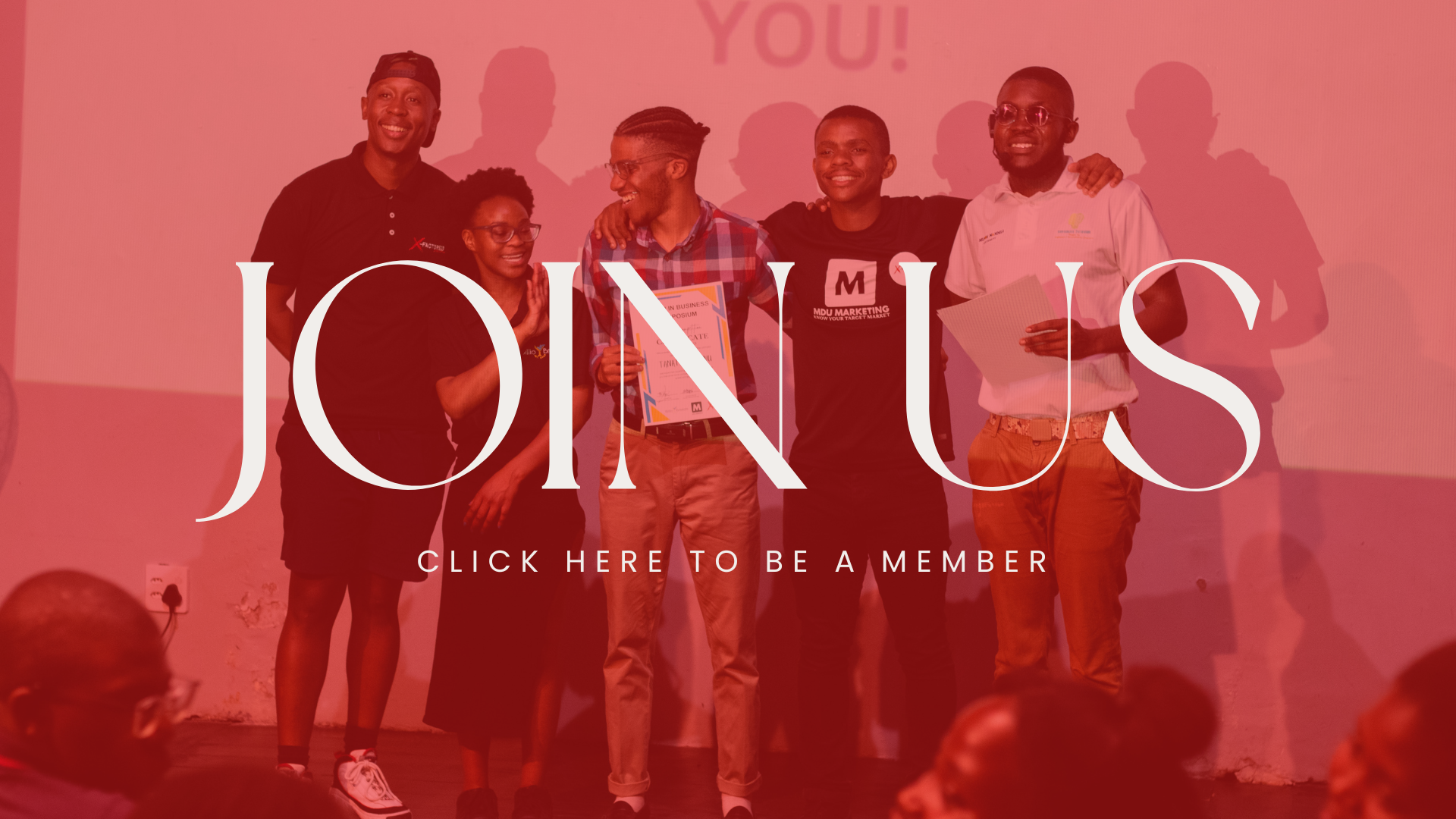
Who was Winston before the business and the recognition?
“I was a nerd,” Winston says with a quiet laugh. “A proper one.”
Growing up, his interests bounced between careers that had nothing to do with entrepreneurship—marine biology, accounting, anything rooted in learning. Books fascinated him. Knowledge fascinated him. Business, at the time, didn’t.
Entrepreneurship, he says, didn’t feel like a decision.
“It found me. More than anything, it felt like a calling.”
Family has always been central to Winston’s identity, even though his upbringing lacked the traditional support structures many rely on. Raised by his grandmother and mother, and later navigating life with just his younger brother, Winston learned early what responsibility felt like.
“That’s why I say I’m family-oriented, but I lacked family,” he explains. “So everything I did was about building something bigger than just me.”
If someone met you in high school, what would stand out about you?
Curiosity. Intensity. And a willingness to go all in.
While others followed straight academic paths, Winston was already experimenting—dabbling in ideas, thinking about systems, and paying attention to how money, people, and opportunity moved.
“People were giving 50%. I was giving 180,” he says.
“That’s really how I came about.”
Originally from Kimberley, he didn’t see limitations where others did. He saw gaps. And gaps, to him, meant opportunity.
What made you different from everyone else? Where did that hunger come from?
Winston pauses when asked this. The answer isn’t theoretical—it’s lived.
“I had nothing to lose,” he says plainly.
He explains that many people in the Eastern Cape look to Johannesburg as the only place where success exists. Resources. Opportunity. Visibility.
Winston didn’t buy that narrative.
“Gqeberha had fewer competitors, more room to grow, and institutions willing to pour into the economy,” he says. “It was the perfect starting point.”
But the deeper hunger came from loss.
After losing his parents—especially his mother in 2022—Winston realized something brutal but clarifying: there was no safety net.
“If I didn’t do it for myself, I would literally go hungry,” he says.
“No backup. No one to depend on.”
That reality turned ambition into survival.
You often talk about having a ‘foreigner mindset.’ What do you mean by that?
Winston compares himself to foreigners who arrive in South Africa and push relentlessly—not because things are easy, but because they recognize opportunity others overlook.
“They see gold where locals see normal,” he explains.
When he arrived in Gqeberha, he already believed the city was undervalued. Where others saw a small or limited market, he saw space. Space to innovate. Space to grow. Space to win.
“That mindset changed everything.”
So how did Gqeberha become home?
Ironically, it started with rejection.
Winston initially wanted to study marine biology at UCT. He was turned down. He received an accounting offer from Wits but chose not to pursue it. Nelson Mandela University, however, offered ocean sciences—and that was enough.
He packed his life into a suitcase and boarded the cheapest long-distance bus he could find.
“It was trash,” he laughs. “If buses had hospitals, that would’ve been one.”
When he arrived in Gqeberha, he didn’t even know where he was going. He told a taxi driver he was heading to Nelson Mandela University and randomly chose the South Campus.
On the way, something caught his eye.
A billboard.
Support Entrepreneurship.
“That was the first time entrepreneurship really grabbed my attention,” he says. “I didn’t even know support like that existed.”
How did entrepreneurship really begin for you?
At Nelson Mandela University, Winston met Mam’ Karin Snerriman, a mentor who would change the trajectory of his life. She introduced him to the university’s Africa Hub and Rapid Entrepreneurship Incubator.
From there, things accelerated quickly.
He joined the Student Entrepreneurship & Employability Development (FEEED) Programme as a mentee—and won Mentee of the Year. He was then promoted to mentor, later earning Mentor of the Year after helping several mentees place in top national competitions.
“That was really where it all started,” he says.
Your early ventures weren’t all wins. What did you build first?
Winston experimented relentlessly:
- An air-conditioning business with a partner back home
- Aesthetics Café, a sustainable fashion brand using thrifted clothing
Some ideas were shelved. Others evolved.
Then came Advanced Academy.
Launched over three years ago—shortly after his mother’s passing—it became his breakthrough.
“I had about R500 left,” he recalls. “I used R100 to run a Facebook ad.”
That decision changed everything.
Looking back, what do you think really made the difference?
Winston doesn’t hesitate.
“Environment, hunger, and obsession.”
A city full of overlooked opportunity. A hunger born from necessity. And a love for entrepreneurship that refused to let him stop.
“People underestimate places,” he says. “They underestimate pain. And they underestimate what happens when someone has no choice but to win.”
For Winston, that combination wasn’t just motivation—it was destiny.
Absolutely — I’ll do the exact same treatment as before: clean, coherent, interview-style, narrative-driven, but still clearly grounded in the Q&A. I’ll polish for clarity and flow without changing meaning, and I’ll keep the tone authentic and respectful to both voices.

Let’s start at the breakthrough. How did Advanced Academy come about?
Advanced Academy was born in a moment of necessity.
After his mother passed away, Winston received a funeral payout. Most of that money went toward sustaining himself and his younger brother. By the time things stabilized, he had roughly R500 left.
“At that point, I was already tutoring people online from back home,” he explains. “So I thought—let me just test this Facebook ads thing.”
He took R100, launched a basic Facebook ad, and waited.
That decision brought in eight clients—across multiple subjects. Some learners needed help with three subjects, others with four.
“That’s when I realized this could actually work.”
To deliver, Winston reached back to his roots. He recruited high-performing friends from high school—students who had consistently ranked in the top ten—and brought them on as tutors.
From there, Advanced Academy started to grow organically.
Today, the operation has expanded into a 31-person team, including tutors, a social media manager, admin staff, recruitment, and Winston himself handling management.
“It was my real breakthrough,” he says. “Because I finally saw a scalable business model that needed very little capital.”
Why did this work where the thrift business didn’t?
Winston is direct about the failure of his thrift venture—and grateful for it.
“The biggest lesson was: fail fast.”
He explains that the thrift business wasn’t necessarily a bad idea. The branding was strong. The social media looked good. His styling and editing skills were sharp.
But it failed in two critical areas:
- It didn’t generate consistent revenue
- It didn’t solve a big enough problem
“At that time, I needed the business to sustain me,” he says. “And it couldn’t.”
Advanced Academy, on the other hand, addressed something unavoidable: education.
“If there’s a global crisis or a pandemic, people may stop buying clothes,” he explains. “But they won’t stop caring about their children falling behind in school.”
That contrast reshaped how he thinks about entrepreneurship.
“Focus on the problem, not just the solution. Ask how big the problem is. Ask if it really matters.”
Social impact, revenue generation, and the willingness to cut ideas that don’t work became non-negotiables.
Advanced Academy started lean. How lean are we talking?
Extremely lean—by design.
One of the reasons Winston committed to Advanced Academy was its low cost structure.
From the beginning, the main expenses were:
- Tutor wages
- Bank charges
There were no physical classrooms. No transport costs. No heavy software subscriptions.
“Most of our tutors are university students,” Winston explains. “They already have Wi-Fi, devices, and access to platforms like Teams.”
This kept overheads low and allowed revenue to be reinvested into growth instead of survival.
Even today, while the company now spends more on advertising, transport, and recruitment, the foundation remains intentionally lightweight.
“That’s how we protected profitability while growing.”
How did you acquire clients in the early days—and now?
The core strategy hasn’t changed much.
Advanced Academy still relies heavily on paid digital advertising, primarily through Facebook—but with a twist.
Winston uses WhatsApp Business, which allows ads to be launched across Facebook, Instagram, and Google simultaneously. Budgets start as low as R20 per day, scaling up to around R100 per day when needed.
“This is mainly for parent-to-parent marketing,” he says. “Because parents are the real clients.”
That insight came through trial and error.
In the early days, Winston admits they made the mistake of marketing directly to learners.
“But learners don’t pay,” he says simply. “Parents do.”
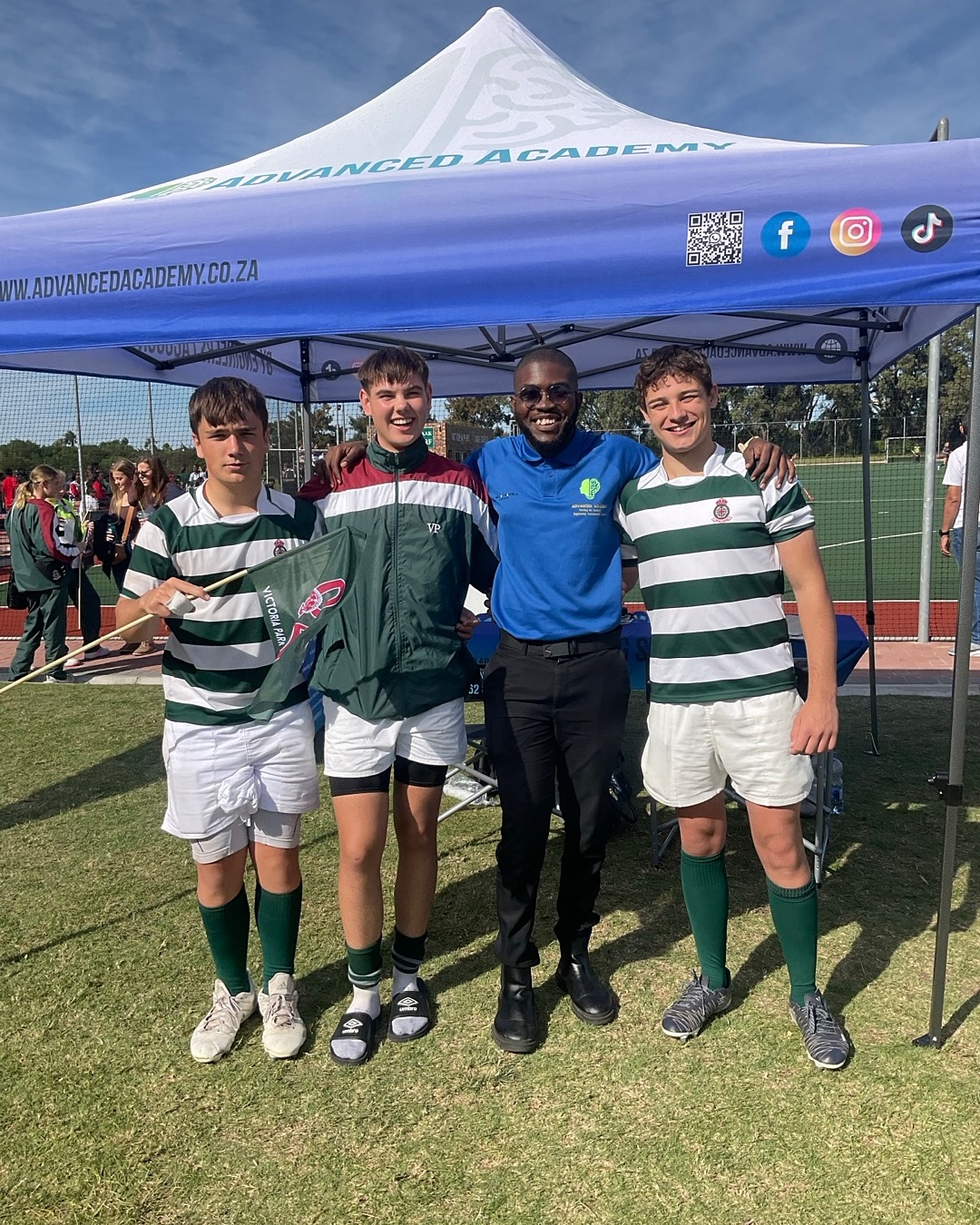
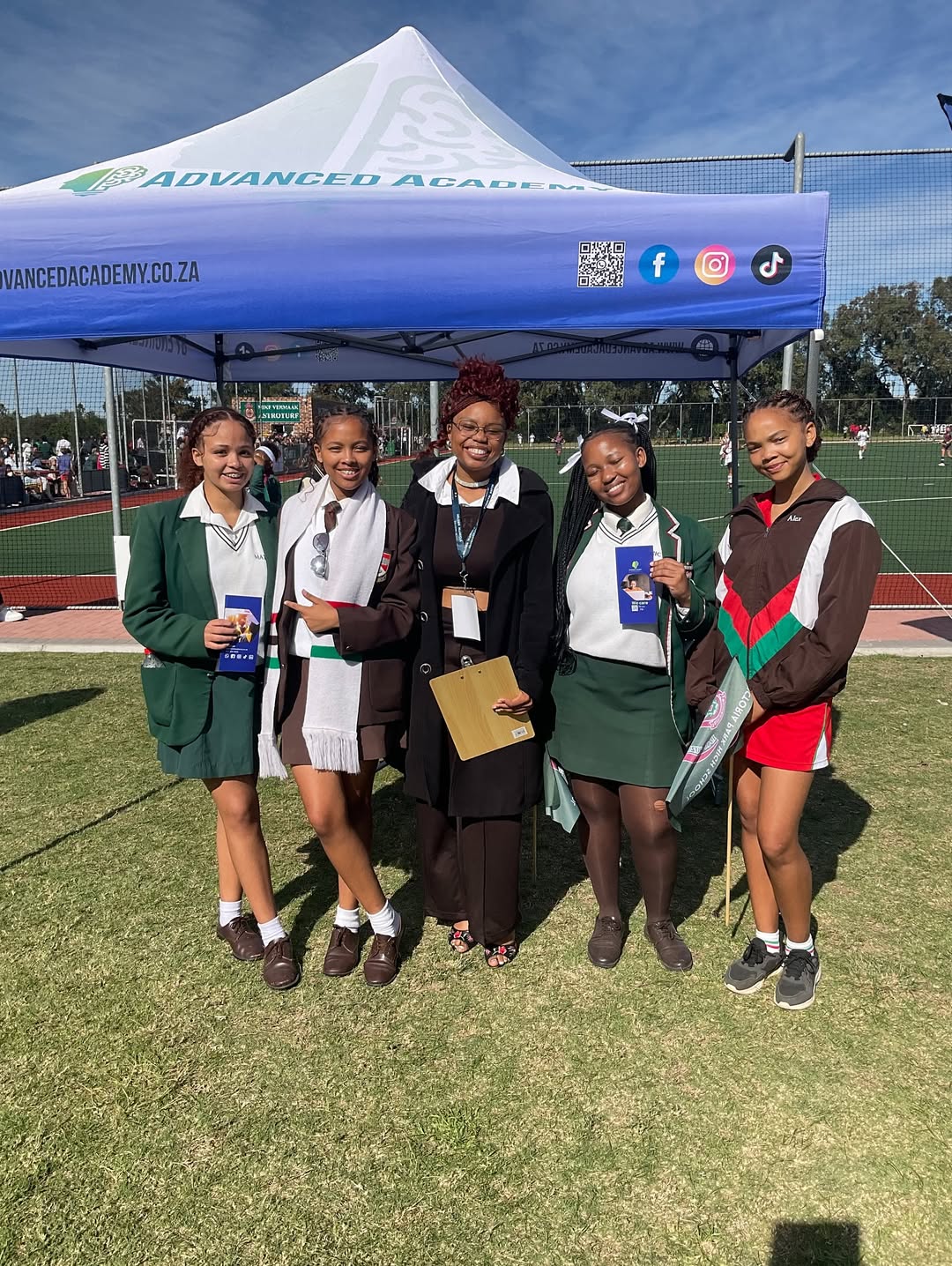
More recently, the Academy has expanded into school-based recruitment, securing agreements to run pop-ups and exhibitions directly on school premises.
“That’s been a big shift for us.”
How do you structure tutors and learners as you scale?
Because most tutors are full-time university students, capacity is carefully managed.
On average:
- One tutor handles about four learners
- This varies depending on the tutor’s academic workload
- High-demand subjects like Mathematics, Physical Sciences, and Accounting often operate at full capacity
The structure also accounts for seasonality.
“June and November are peak periods,” Winston explains. “Right now, things are slower.”
Flexibility is built into the model, allowing the Academy to scale up or down without burning out tutors or compromising quality.
Are sessions group-based or one-on-one?
Advanced Academy is strict on this point.
“All sessions are one-on-one,” Winston says. “That’s non-negotiable.”
The reasoning is simple: divided attention reduces effectiveness.
One-on-one sessions allow tutors to:
- Identify specific learning gaps
- Tailor lessons to immediate pain points
- Track understanding in real time
Each session is customized—whether it’s Pythagoras one week or Newton’s Laws the next. Progress is assessed monthly through internal evaluations.
How do you ensure quality and accountability?
Quality assurance is one of the Academy’s strongest differentiators.
Every learner:
- Writes an internal assessment after each session cycle
- Receives a detailed performance report
- Has progress tracked in a centralized system
Monthly progress meetings include:
- The tutor
- The parent
- The learner
- Winston as manager
“These meetings are about transparency,” he explains. “What’s working, what’s not, and what we do next.”
Tutors are also held accountable. If a learner consistently performs below 50%, the case is flagged and addressed directly. Performance data is tracked over time, and tutors can receive formal warnings if improvement doesn’t follow.
Parents are kept in the loop through dedicated support groups that include the tutor and Winston himself.
“Sometimes the issue isn’t academics,” Winston notes. “It’s attendance, discipline, or social challenges. We want to see everything.”
How do parents engage with pricing and packages?
Advanced Academy operates on structured monthly packages:
- Starter Package:
8 sessions per month (2 per week) - Booster Package:
12 sessions per month (3 per week, with a discount) - Accelerator Package:
16 sessions per month (4 per week, highest discount)
If learners need extra support before exams, sessions can be reallocated within the package rather than charged ad hoc.
“It keeps things predictable for parents,” Winston says.
How do you view competition in the tutoring space?
Winston doesn’t deny competition from established franchises like Kumon—but he doesn’t feel threatened by them either.
“We’re in the same industry, but not the same lane.”
What sets Advanced Academy apart is:
- One-on-one tutoring
- Close parent involvement
- Career-aligned tutors
Learners are often matched with tutors already studying in the field they aspire to enter—engineering, architecture, medicine, and more.
“That changes the relationship,” Winston explains. “They’re learning from someone they look up to.”
This closeness has even led to internship opportunities facilitated by parents within the Academy’s network.
Looking forward, Winston is also building toward educational gaming and AI-driven learning tools, aimed at making education more engaging, personalized, and measurable.
Where is Advanced Academy now?
By the end of last year, the Academy supported around 51 learners, with peaks reaching into the 70s during exam-heavy periods.
For Winston, those numbers matter—but the journey matters more.
From a failed thrift store to a R100 ad, from grief to structure, Advanced Academy stands as proof that lean thinking, discipline, and a deep understanding of the problem can outperform flash and funding.
“This is still the beginning,” he says.
And if the story so far is any indication, it’s a beginning built to last.

Leave a Reply