
Family businesses are often romanticized as legacies that naturally pass from one generation to the next. In reality, most do not survive the transition. Behind every long-standing family enterprise lies a series of difficult decisions, uncomfortable conversations, and deliberate structures designed to outlast any single individual.
Germany, home to one of the world’s strongest cultures of family-owned businesses, offers a powerful lens through which to explore this challenge. With so many enterprises passed down through generations, the country has even established formal associations dedicated solely to supporting family businesses. For young people—particularly people of colour looking to build lasting entrepreneurial legacies—the question is not simply how to start a business, but how to ensure it endures.
How do founders prepare the next generation without limiting their freedom? How do families balance individual ambition with collective responsibility? And what happens when succession does not go according to plan?
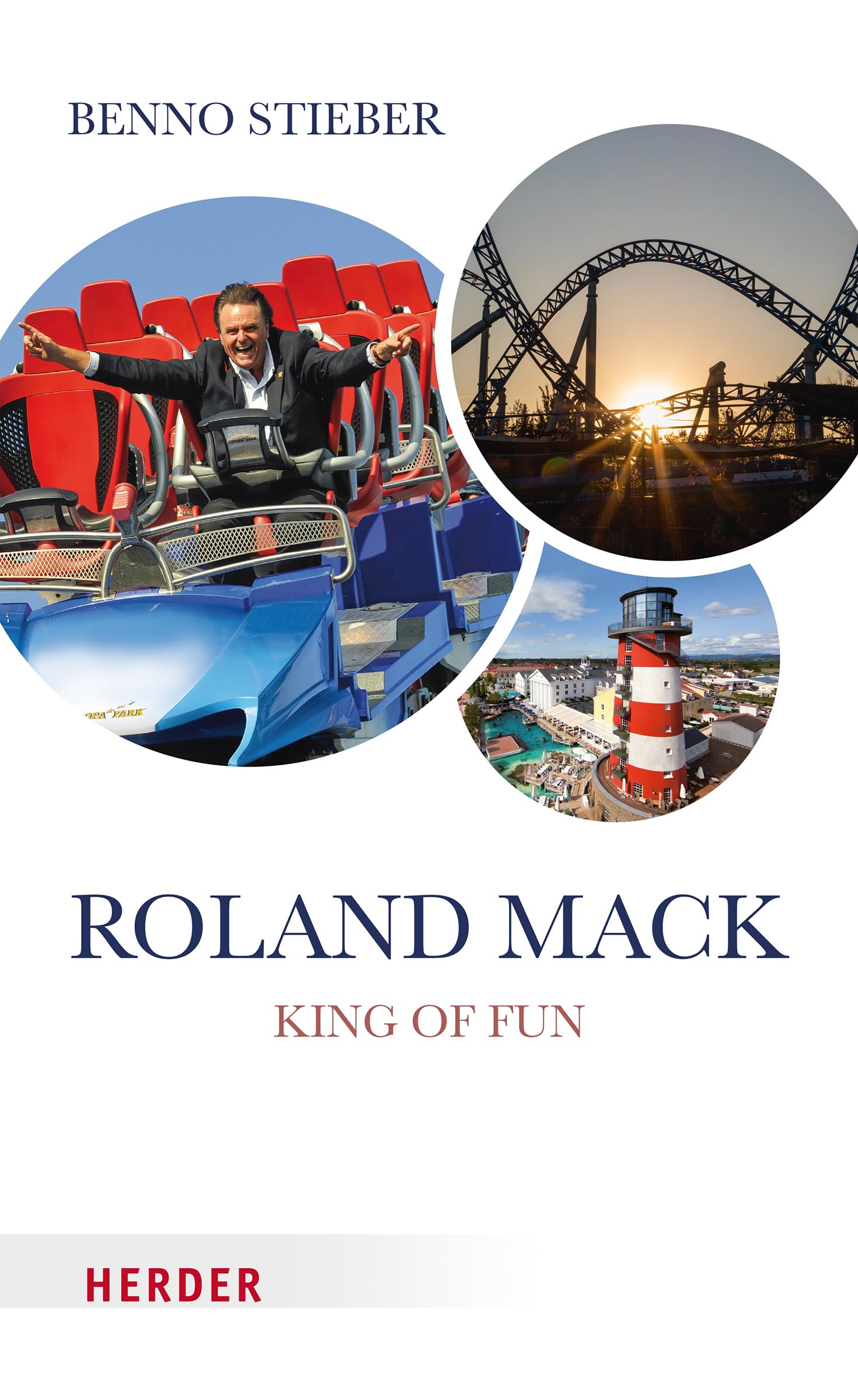
To explore these questions, we turn to King of Fun, the story of Roland Mack, founder of Europa-Park Family Resort, and the multigenerational family enterprise behind it. Through the Mack family’s deliberate approach to succession—culminating in the creation of the Mack Magna Carta—we uncover what it truly takes to build a business designed not just for success, but for continuity.
The Generation Bus
On page 212 of King of Fun, author Benno Steiber introduces a compelling metaphor that reveals who Roland Mack is behind the wheel of the Europa-Park “bus.” Steiber explains that people on a bus often form a temporary community as they travel toward a shared destination. Within that community, everyone has a role to play: one person ensures there are snacks, another keeps passengers entertained, while others contribute in quieter but equally important ways.
In this metaphor, Roland Mack is the person responsible for making sure everyone reaches the destination safely. He is not only driving the bus, but also ensuring that each passenger feels secure and valued along the journey. However, it becomes clear that there comes a time when even the most capable driver must prepare to step aside. For Mack, this meant taking deliberate action to ensure that what he built would be efficiently and effectively preserved—and reimagined—for generations of the Mack family to come.
The Generation Iron
On page 213 of King of Fun, Benno Steiber explains that as new generations come of age within a family business, a wide range of complex—and often uncomfortable—questions must be openly discussed and “ironed out.” Among them are:
- Which members of the next generation are eligible to join the family business?
- At what point should they be allowed to enter the business?
- How can each new family member meaningfully add value?
- What happens if someone chooses to leave the business to pursue a completely different path?
- Can a family member return later and still be involved?
- Must the business always be run by family members, or can external professionals represent the family and manage operations?
- What if no one from the next generation wishes to continue the business?
- And ultimately, can—or should—the business ever be sold?
To address these questions, the Mack family engaged a succession-planning lawyer. What initially began as the idea of a family constitution evolved into what is now known as the Mack Magna Carta—a foundational document created collectively by key family members and those chosen to guide the business into the future.
The Magna Carta did not come easily. It was the result of a year and a half of closed-door meetings, intense debates, discussions, and, at times, painful disagreements. Through this process, the family articulated their shared values, company goals, potential roles for each family member, and individual wishes and ideas. These conversations not only deepened the next generation’s awareness of their 300-year-old entrepreneurial legacy, but also revealed moments of both unity and division.
At the end of this demanding process, the Mack family stood behind a 57-page constitution: The Mack Magna Carta. The document clearly established the following principles:
- No family member may establish a separate company in which the others do not hold a stake.
- Future generations will be supported in their education, training, and personal development.
- Each family member has the right to decide whether they wish to become actively involved in one of the companies until the age of 30.
- Family members who choose not to work directly in the business may still benefit, to a limited extent, from the company’s success through a foundation established in 2019.
- Future generations are expected to use their talents and skills to sustain the family business, guided by the central principle: serve first, earn later.
- Family members are obligated to reconcile following disputes.
- Mutual respect between generations is mandatory.
- The older generation commits to trusting the next generation and refraining from public criticism in front of family members or employees.
- In turn, the younger generation commits to keeping the older generation informed about all major decisions affecting the business.
At the heart of the Magna Carta lies a powerful guiding belief:
The family does not focus on what the business can give to each individual, but on what each individual can contribute to secure the future of the business.
The family constitution formalizes the responsibility of each generation’s entrepreneurial contribution, ensuring continuity not only during succession, but well beyond it.
As part of this long-term strategy, the Mack family established a foundation that owns all major assets—including Europa-Park, Rulantica, and the family’s hotels. This structure ensures that every family member benefits from the business, safeguards a significant portion of the company’s capital for the future, and allows the businesses to remain under family management for generations to come.
The story of the Mack family offers more than a case study in business succession—it provides a blueprint for longevity, responsibility, and intentional leadership. Through King of Fun, we see that sustaining a family-owned business across generations is not a matter of tradition alone, but of difficult conversations, structured planning, and a shared commitment to something greater than individual ambition.
Learning from the Mack family, among other family-business owners, we are reminded that founders must be deliberate about succession while also creating safeguards that ensure a legacy can endure—whether future generations choose to be actively involved or not. The Mack Magna Carta demonstrates that clarity, accountability, and mutual respect are not optional extras, but essential tools for survival across generations.
Perhaps most importantly, the Mack family’s approach reframes success. It shifts the focus away from personal gain and toward collective stewardship, where each generation is entrusted not just with assets, but with values. In a time when many family businesses struggle to survive the transition from one generation to the next, the Mack family shows that longevity is possible when succession is treated not as an afterthought, but as a responsibility—one that extends beyond the family itself and into the future.

Leave a Reply